Supplement label guides
Plain-language explanations of how supplement labels work, what the regulations actually require, and how to verify a claim against primary evidence. No affiliate links, no product recommendations — these pages exist to make the reviews on this site readable.
These guides contain no affiliate links. They are published as part of the editorial side of BalancePhase, separate from the reviews. Nothing on this page is a recommendation to buy anything.
Published guides
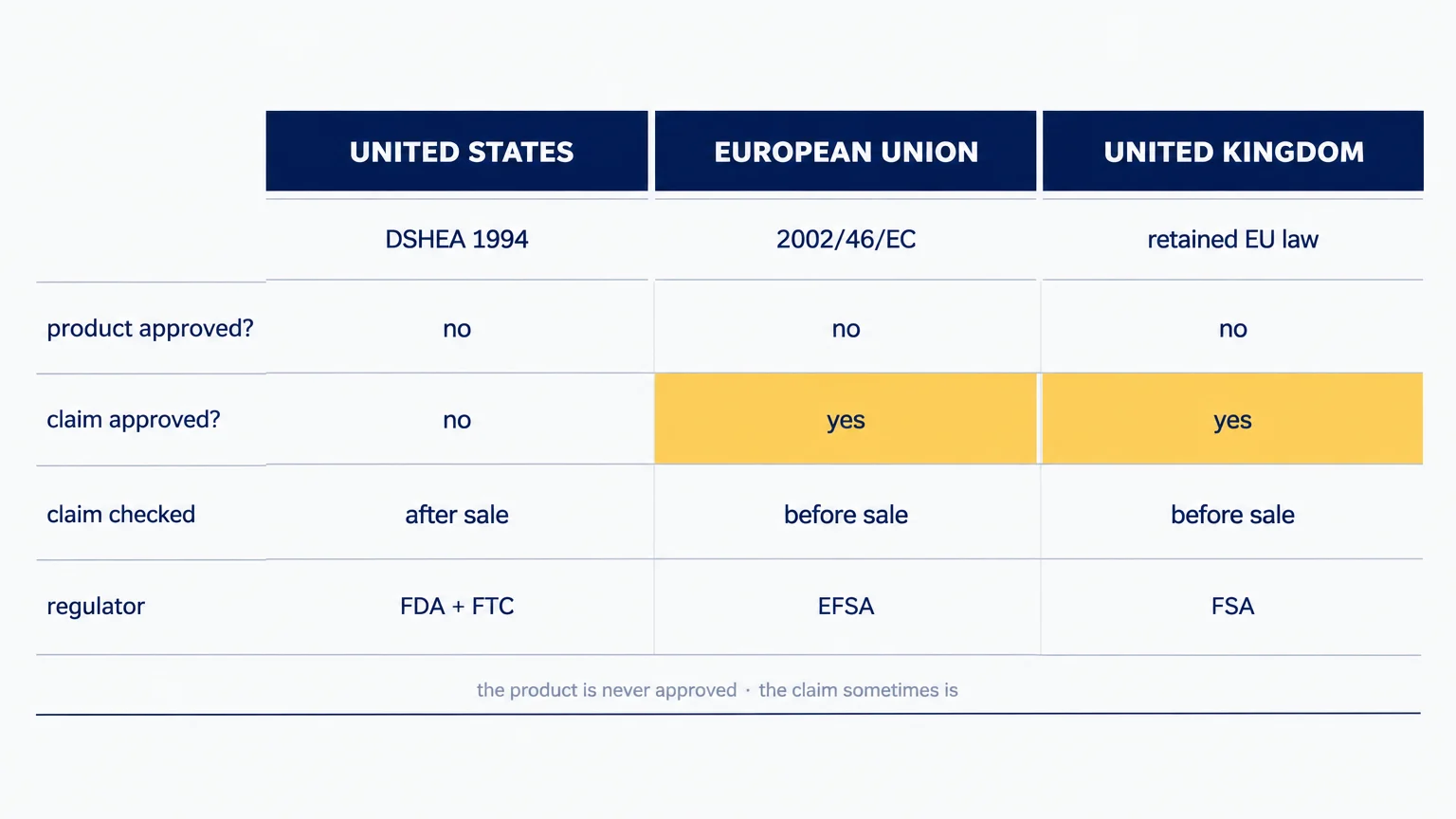
What is a dietary supplement? The legal category that explains everything else
A supplement is a legal category of food, not a medicine without a prescription — and that single fact explains the rest of this series. This guide sets out the DSHEA definition, why no premarket approval is required, what a structure-function claim is, the FDA/FTC split that lets labels and sales pages say different things, and how the US, EU and UK regimes differ on the one question that matters.
Read the guide →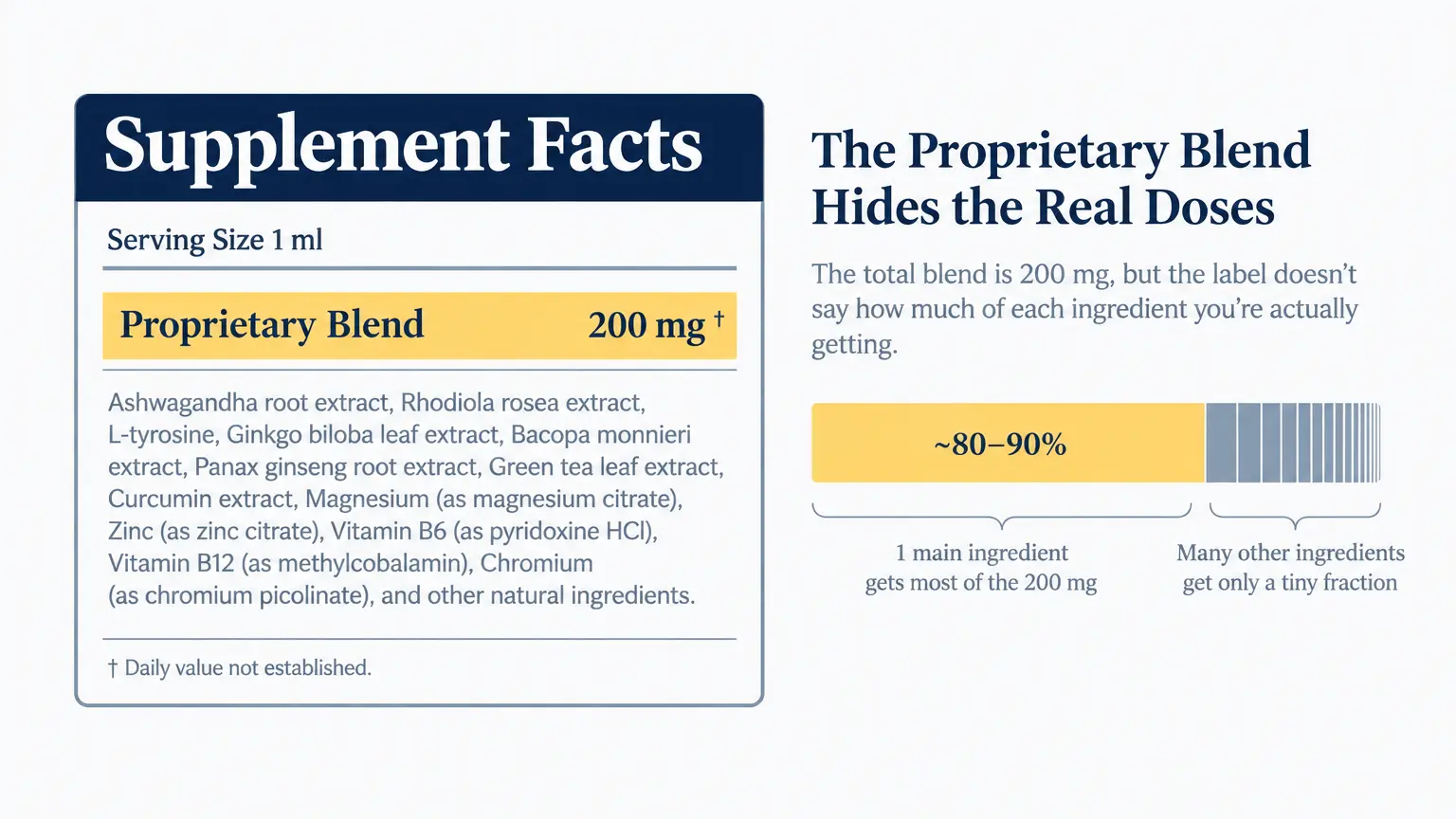
Proprietary blends: how a supplement hides an underdosed formula in plain sight
A proprietary blend lets a product disclose total weight while hiding every individual dose. This guide explains 21 CFR 101.36, works through the arithmetic of a 200 mg blend across 22 ingredients, and gives four signals that separate a defensible blend from one built to look comprehensive.
Read the guide →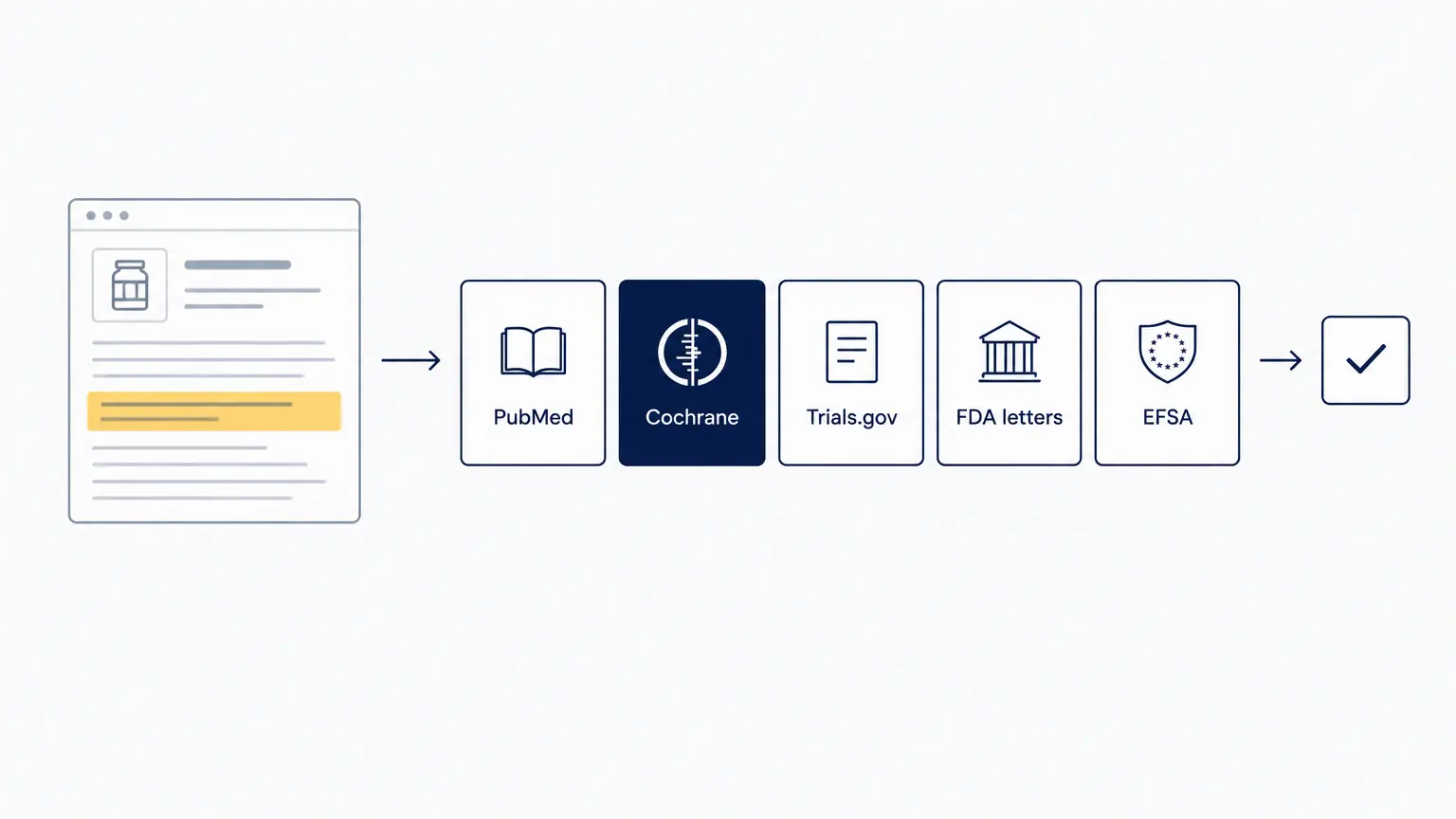
How to check whether a supplement claim is backed by evidence
No authority verifies a supplement claim before it reaches you. This guide gives you five databases, a five-step method, a way to read an abstract in sixty seconds, and the four interpretation errors that make weak evidence look strong.
Read the guide →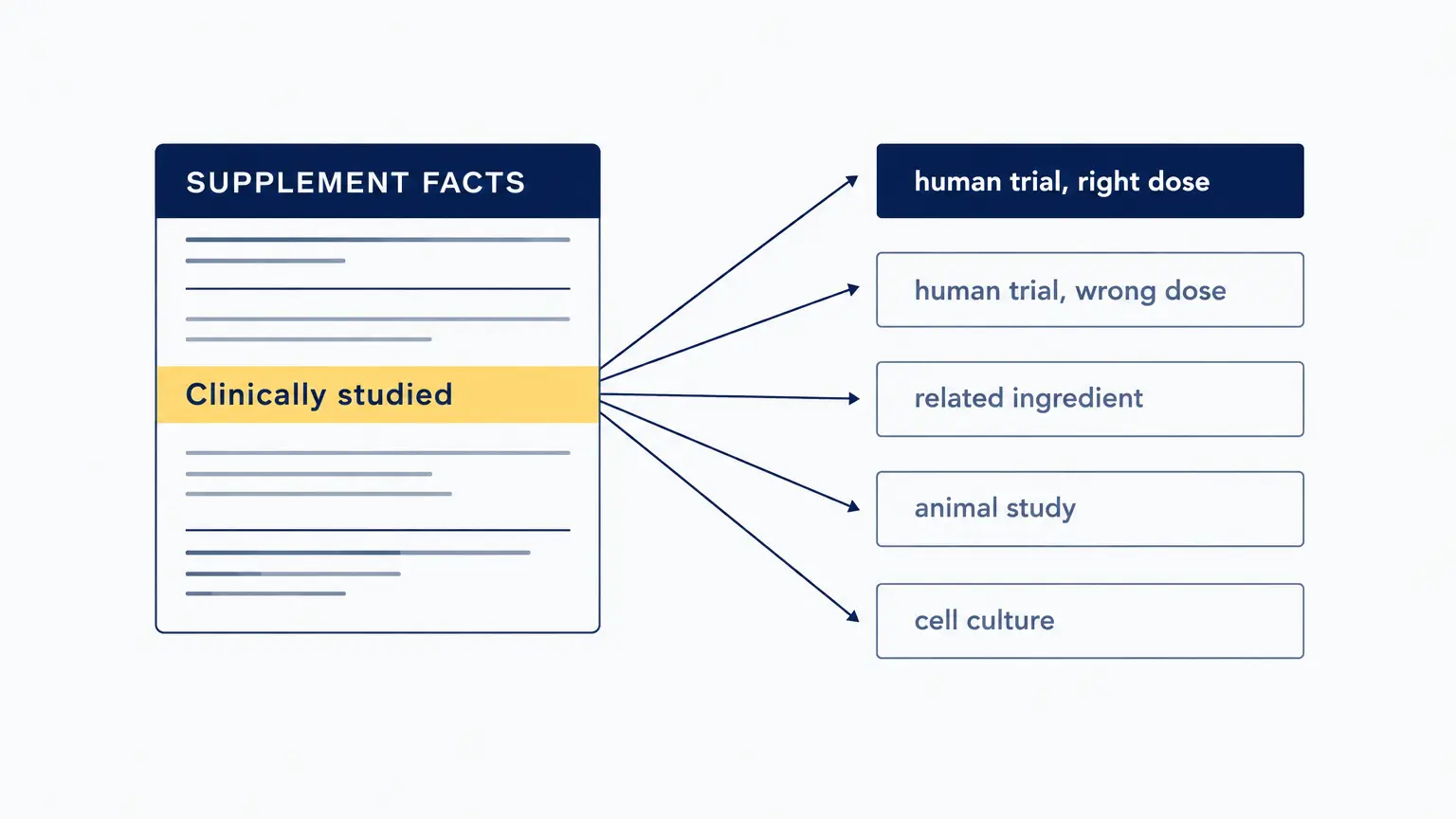
Why "clinically studied" means almost nothing on a supplement label
The phrase has no legal definition in either US or EU supplement regulation. This guide sets out the five things it can mean — from a human trial at the right dose to a cell-culture experiment — explains why "clinically proven" is regulated while "clinically studied" is not, and gives a three-question test.
Read the guide →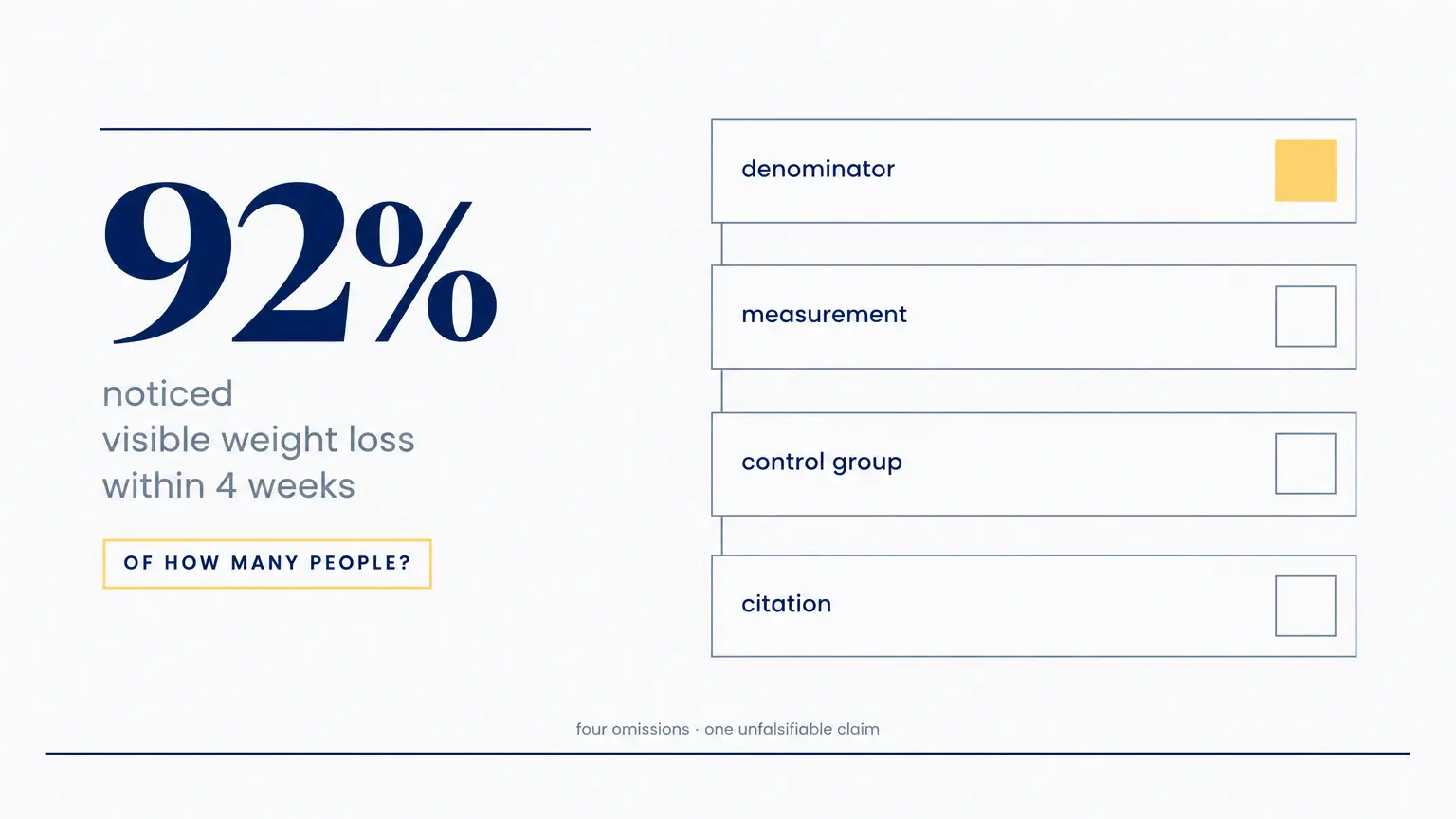
The 92% claim: how supplement marketing manufactures a statistic
Weight-loss marketing does not invent statistics — it builds sentences that are true and unverifiable at once. This guide takes the standard percentage claim apart: the missing denominator, the self-reported verb, the absent control group and the uncited study, plus the footer that contradicts the headline above it.
Read the guide →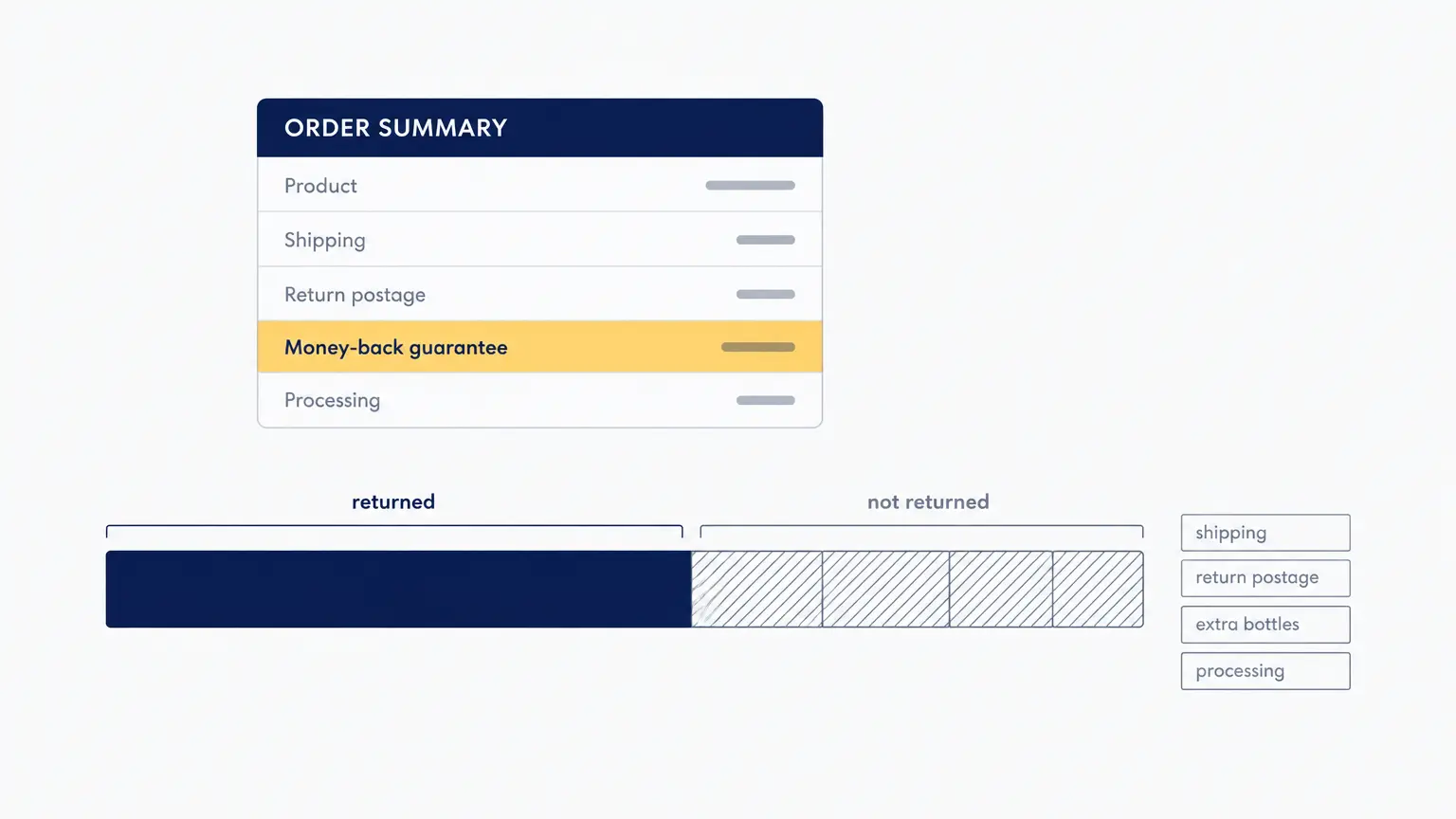
The supplement guarantee that protects no one
A 90-day money-back guarantee is the most cited reason to trust a seller and the least examined. This guide sets out the five clauses that empty it in practice — shipping excluded, window from purchase, extra bottles out of scope — the arithmetic that makes it a conversion tool, and the chargeback route that ultimately protects a buyer.
Read the guide →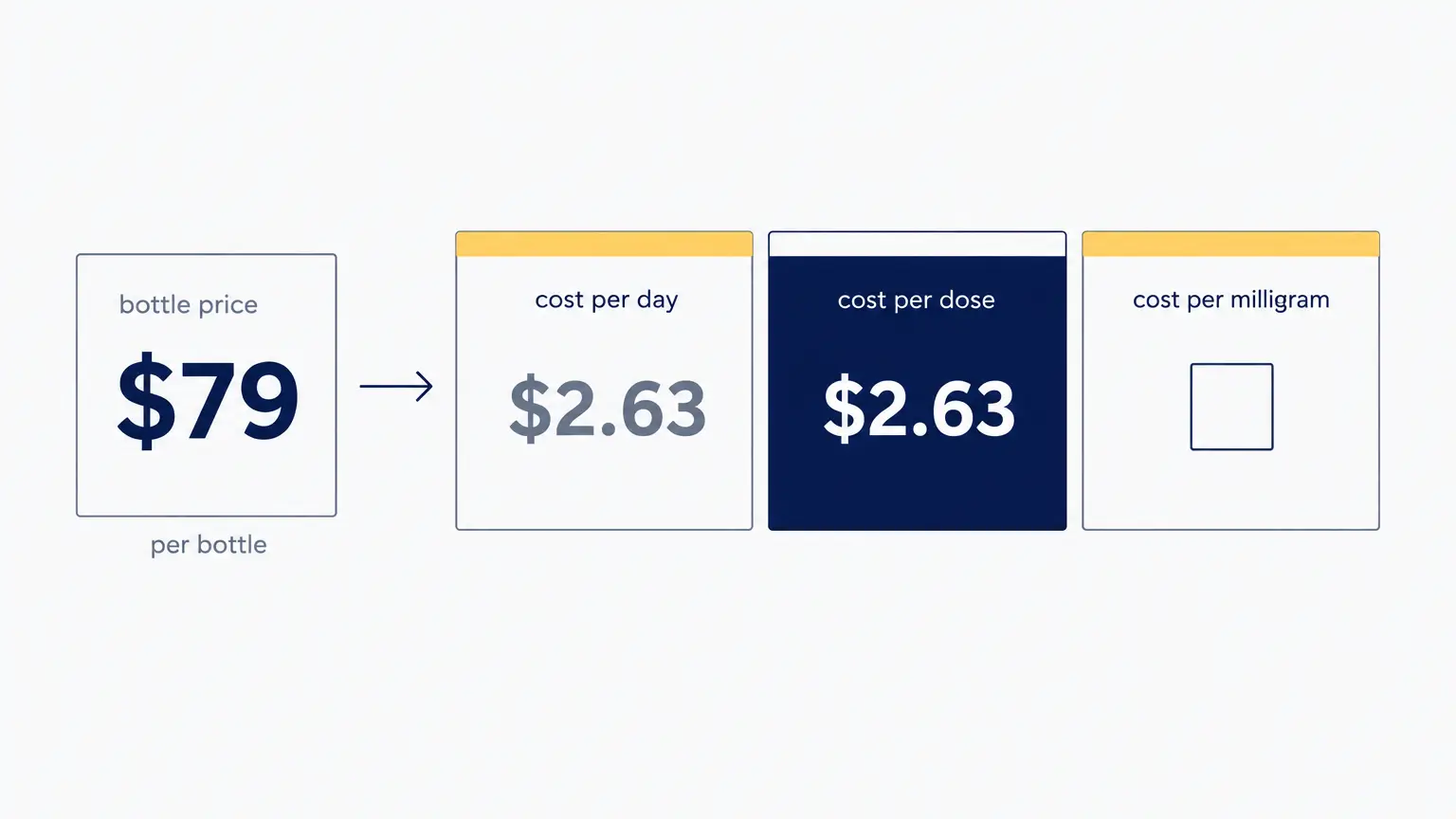
Price per day: the number supplement sellers never put on the label
Two products at the same price per bottle can differ fourfold in what they cost you per day. This guide sets out the three figures that compare honestly — cost per day, cost per dose and cost per milligram — explains the bundle anchor, why shipping changes the ranking, and the point at which a pricing comparison stops being possible at all.
Read the guide →What these guides cover
The guides follow the questions a label is supposed to answer and often does not: what is in the product, how much of it, whether anything supports it, and what it actually costs. Every page works from the primary regulation — 21 CFR in the United States, Directive 2002/46/EC and Regulation (EU) No 1169/2011 in the European Union — rather than from what other review sites repeat.
Where a guide references a product, it is because that product's panel is publicly published and documented, not because the product is recommended. The method used across the site is set out in our Methodology, and the rules governing independence and corrections are in the Editorial Policy.
How the five guides fit together
Each one answers a different question about the same bottle. Read in order, they cover the full path from label to conclusion.
The proprietary blends guide deals with what the label withholds — a formula that discloses total weight but hides every individual dose. The evidence guide deals with how to test a claim against primary sources when no one has verified it for you. The "clinically studied" guide deals with what the wording itself is worth — a phrase with no legal definition, used identically by companies with strong evidence and companies with none. The guarantee guide deals with the exit — what happens if the product disappoints, and how much of what you paid actually comes back. And the price guide deals with the number that ranks them — the cost per day, which is the only figure that compares two products across different bottle sizes and serving counts.
The five are ordered that way on purpose. You cannot calculate cost per milligram without first knowing how to read a blend, and you cannot judge whether a price is worth paying without knowing whether the dose reaches anything studied. Start at the label, end at the price.
Why these exist alongside the reviews
A review is only useful if you can follow its reasoning. When a review says a formula averages 9 mg per ingredient, you should be able to check what that number means without taking our word for it. The guides are where that reasoning is explained in general terms, so the reviews can stay focused on the specific product.
They also exist because the supplement market rewards a reader who cannot tell the difference between a disclosed dose and a hidden one. That is a solvable problem, and it does not require a chemistry background — only arithmetic, a regulation you can look up, and the patience to leave the sales page.
Related
Product reviews for the US market are in Reviews (US). The editorial standards behind both sections are in About and Methodology.